
مشتريات المقاولات فيها مشكلة مختلفة عن باقي القطاعات: أسعار المواد بتتحرك خلال المشروع نفسه، والقرار بتاع “نشتري دلوقتي ولا نستنى” بيأثر على الهامش بشكل مباشر. المشكلة إن غالبية الشركات بتكتشف إن سعر مادة معينة اتغير بعد ما يوصلها عرض السعر، مش قبل ما تقرر توقيت الشراء. الفرق بين نظام مشتريات عادي ونظام فيه ذكاء أسعار حقيقي هو بالظبط النقطة دي: هل عندك رؤية على السوق قبل ما تتصرف، ولا بعد؟
تغطية الطلب: كام بند فعلاً عندك سعر موثوق ليه؟
أول سؤال قبل أي حاجة تانية: من كل المواد اللي مطلوبة للمشروع، كام بند عنده عرض سعر حديث وموثوق فعلاً؟ في الغالب الإجابة أقل مما الشركة متوقعة. نظام تتبع المشتريات بيحسب “نسبة تغطية السوق” — عدد المواد المسعّرة حديثًا مقسومة على إجمالي المواد المطلوبة — وده بيكشف فجوة كانت مخفية: بنود كتير بتتشترى على أساس آخر سعر معروف، مش سعر السوق الحالي.
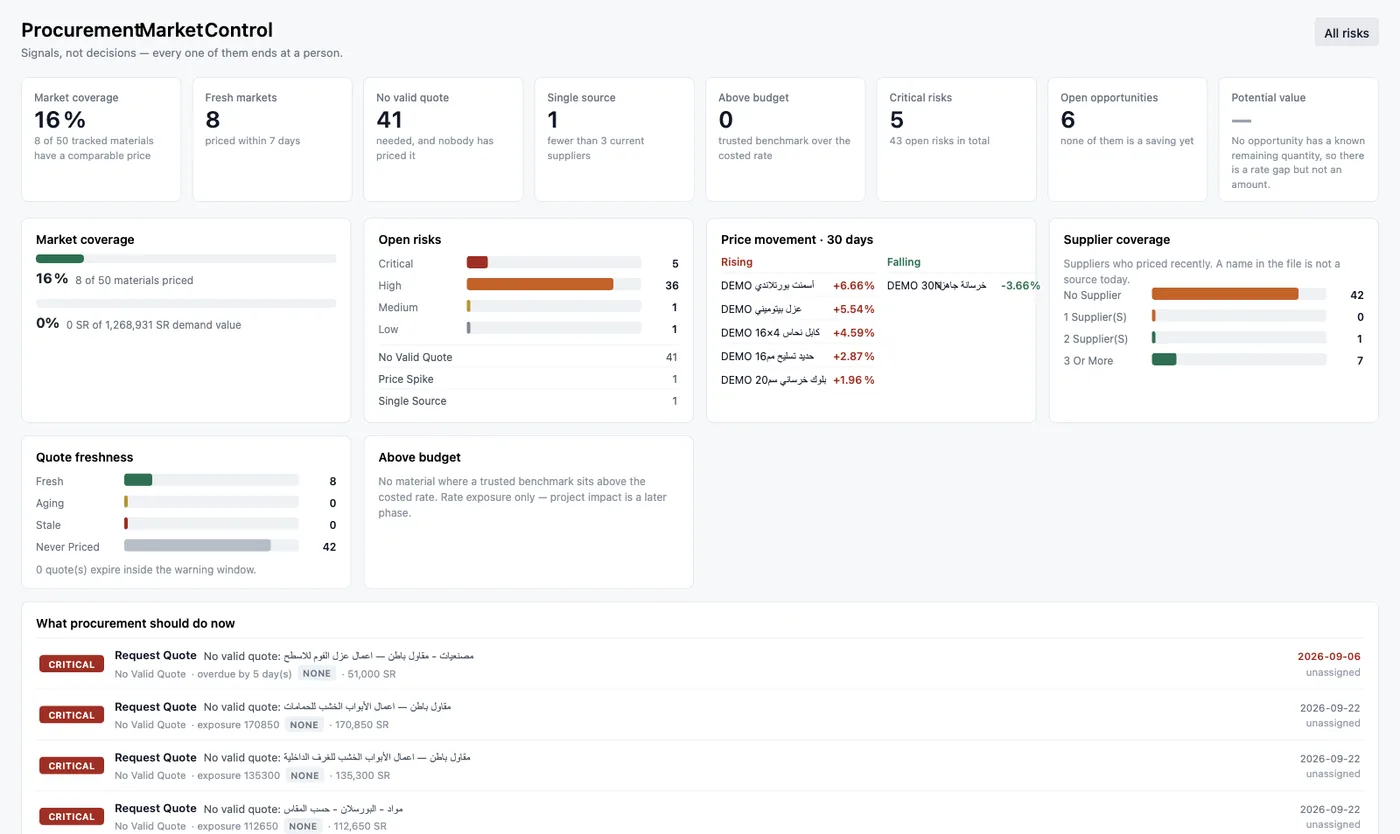
ضبط سوق المشتريات — تغطية السوق، تصنيف المخاطر حسب الشدة (حرجة/عالية)، وقائمة “إيه اللي المشتريات محتاجة تعمله دلوقتي” بتاريخ استحقاق واضح.
مخاطر المشتريات: مالوش عرض سعر، مالوش إلا مورد واحد
بعد تغطية الطلب، السؤال التاني: البنود اللي مالهاش عرض سعر صالح دلوقتي — إيه حجم التعرض المالي بتاعها؟ ولو مورد واحد بس هو مصدر مادة حرجة، إيه المخاطرة لو تأخر أو رفع السعر؟ النظام بيصنف المخاطر دي حسب الشدة (حرجة، عالية، متوسطة) وبيحسب قيمة التعرض بالريال لكل بند، عشان الأولويات تبقى واضحة بدل ما كل حاجة تبان “مهمة” بنفس القدر.
الأهم إن ده مش بيقف عند التصنيف — بيتحول لقائمة إجراءات محددة بتاريخ: “اطلب عرض سعر — متأخر X أيام” مع قيمة التعرض المالي. الفرق كبير بين “فيه مخاطرة في المشتريات” كجملة عامة، و”البند ده تحديدًا محتاج عرض سعر من 5 أيام ومفيهوش حد اتحرك فيه”.
حركة الأسعار: هل السوق طالع ولا نازل؟
غير المخاطر الآنية، فيه سؤال أبعد مدى: أسعار المواد الأساسية لمشروعك — اتجاهها إيه في آخر 30 يوم؟ مادة سعرها بيرتفع باستمرار محتاجة قرار شراء مختلف عن مادة سعرها مستقر أو نازل. تتبع حركة السعر بيوريك مش بس “طالع ولا نازل”، لكن كمان عدد الأرصاد اللي وراء الرقم ده (يعني هل الاتجاه ده موثوق ولا مبني على عرضين بس) ودرجة التقلب — المواد اللي بتتقلب كتير محتاجة متابعة أقرب من المواد المستقرة.
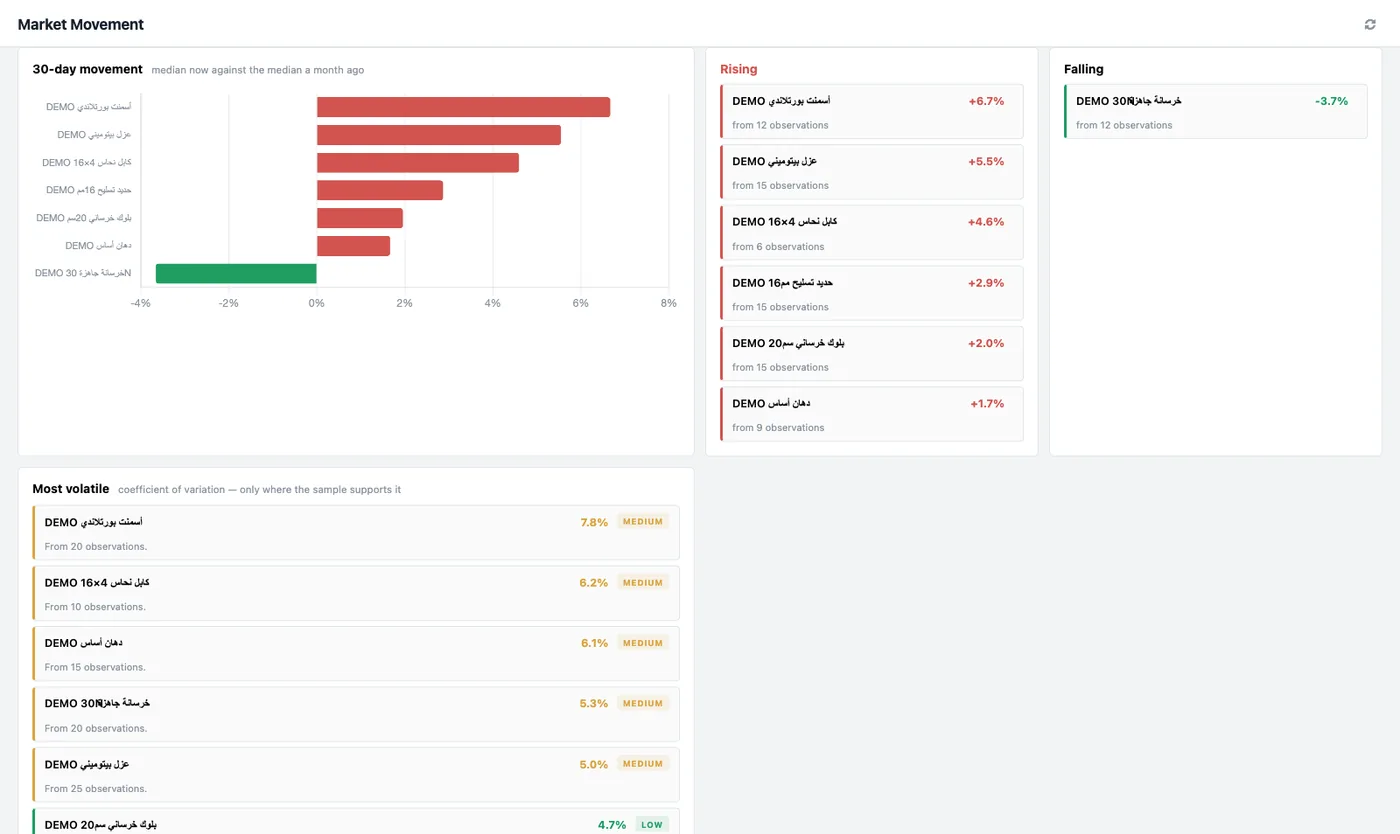
حركة أسعار المواد خلال 30 يوم — الأسعار الصاعدة والهابطة، عدد الأرصاد وراء كل رقم، ودرجة التقلب لكل مادة.
الأثر على هامش المشروع
المشتريات مش قرار منعزل — أي تغيير في سعر مادة أساسية بيتغذى مباشرة في حساب التكلفة المتوقعة عند الإنجاز (EAC) للمشروع، وبالتالي في الهامش المتوقع. لما تكون المشتريات والتكلفة على نفس النظام، ارتفاع سعر مادة بيظهر أثره على الهامش فورًا، مش بعد ما الفاتورة توصل. ده الرابط اللي بيوصل قرار المشتريات اليومي بقرار الإدارة الأكبر عن ربحية المشروع.
البدء: مش كل المواد بنفس الأهمية
مش لازم تراقب كل بند في جدول الكميات بنفس الدقة. الأفضل تبدأ بالمواد اللي ليها أكبر تأثير على الميزانية أو أكبر تعرض لتقلب السعر — الحديد والأسمنت غالبًا في المقدمة — وتوسّع القائمة تدريجيًا. الهدف مش تتبع كل حاجة، الهدف إنك تكون شايف البنود اللي فعلاً ممكن تأثر على هامشك قبل ما تشتريها، مش بعد ما توصلك الفاتورة.
الجزء ده من نظام أودو ERP للمقاولات بيشتغل جنب ضبط تكلفة المشروع من جدول الكميات لحد الهامش المتوقع — تعرض السعر اللي بتقفله في المشتريات بيتحدث في حساب EAC مباشرة. لو عايز تشوف الاتنين شغالين مع بعض على بياناتك، احجز استشارة مجانية.
Construction procurement has a problem that's different from other industries: material prices move during the project itself, and the "buy now or wait" decision affects margin directly. Most companies find out a material's price has changed after the quote arrives, not before they decide when to buy. The difference between an ordinary procurement system and one with real price intelligence is exactly that: do you have visibility into the market before you act, or after?
Demand Coverage: How Many Items Actually Have a Trusted Price?
The first question before anything else: of all the materials required for the project, how many actually have a recent, trusted quote? In most cases, the answer is lower than the company expects. A procurement tracking system calculates "market coverage" — the number of recently-priced materials divided by total materials required — and that reveals a gap that was hidden: many items get purchased based on the last known price, not the current market price.
Procurement market control — market coverage, risk classified by severity (critical/high), and a "what procurement should do now" queue with clear due dates.
Procurement Risk: No Valid Quote, Single-Source Dependency
After demand coverage, the next question: for items with no valid quote right now, what's the financial exposure? And if a single supplier is the only source for a critical material, what's the risk if they're delayed or raise the price? The system classifies these risks by severity (critical, high, medium) and calculates the exposure in currency for each item, so priorities are clear instead of everything looking equally "important."
What matters most is that this doesn't stop at classification — it turns into a specific, dated action queue: "Request Quote — overdue by X days," with the financial exposure attached. There's a real difference between "procurement has some risk" as a general statement, and "this specific item has needed a quote for 5 days and nobody has acted on it."
Price Movement: Is the Market Trending Up or Down?
Beyond immediate risk, there's a longer-range question: how have your key materials trended over the last 30 days? A material with a steadily rising price needs a different purchasing decision than one that's stable or falling. Price movement tracking shows you not just "up or down," but also how many observations back that number (is the trend reliable, or based on just two quotes) and the volatility — materials that swing widely need closer attention than stable ones.
30-day material price movement — rising and falling materials, the number of observations behind each figure, and volatility per material.
The Effect on Project Margin
Procurement isn't an isolated decision — any change in a key material's price feeds directly into the project's Estimate at Completion (EAC), and from there into forecast margin. When procurement and cost control run on the same system, a material price increase shows up in the margin immediately, not once the invoice arrives. That's the link connecting a daily purchasing decision to management's bigger question about project profitability.
Getting Started: Not Every Material Deserves the Same Attention
You don't need to track every BOQ line item with the same precision. It's best to start with the materials that have the biggest budget impact or the biggest exposure to price volatility — steel and cement are usually first — and expand the list gradually. The goal isn't to track everything; it's to see the items that could actually affect your margin before you buy them, not after the invoice arrives.
This piece of Odoo ERP for construction works alongside cost control from the BOQ to forecast margin — the price you lock in during procurement feeds directly into the EAC calculation. If you want to see both working together on your own data, book a free consultation.