
أغلب شركات المقاولات بتبني جدول الكميات (BOQ) بعناية وقت التسعير، وبعدين بيتحول لملف إكسل جانبي محدش بيرجعله إلا وقت النزاع. المشكلة إن الميزانية المعتمدة والصرف الفعلي بيتابَعوا في مكانين مختلفين، فالشركة بتعرف إن فيه مشكلة في هامش المشروع بعد ما يخلص، مش وهي لسه تقدر تتصرف. الفرق بين النظامين بسيط: هل جدول الكميات بيتحول لهيكل تكلفة حي بيتحدث كل يوم، ولا بيفضل مستند تسعير جامد؟
من جدول الكميات إلى هيكل تكلفة حقيقي
الخطوة الأولى إنك تربط كل بند في جدول الكميات بعقدة في WBS (هيكل تقسيم العمل) ومركز تكلفة محدد. في نظام زي أودو، ده بيتم عن طريق المحاسبة التحليلية (Analytic Accounting): كل مشروع بياخد خطة تحليلية خاصة بيه، وكل مركز تكلفة تحتها (مواد، عمالة، مقاولي باطن) بياخد كود تحليلي مستقل. أي فاتورة شراء أو ساعة عمل أو مستخلص بتتسجل تلقائيًا تحت الكود الصح، بدل ما تتجمع يدويًا في إكسل آخر الشهر. ده مش ميزة جاهزة تجيلك من أول يوم — محتاجة تخصيص وربط بحسب هيكل التكلفة الفعلي لشركتك، وده بالظبط اللي بيحصل في مرحلة الإعداد.
الميزانية مقابل الفعلي مش كفاية لوحدها
أغلب أدوات المتابعة بتوقف عند “الميزانية مقابل الفعلي” — رقمين بس. المشكلة إن الرقمين دول ما بيقولوش حاجة عن المستقبل: لو صرفت 10% من الميزانية وأنجزت 5% بس من المشروع، الميزانية مقابل الفعلي هتقولك “لسه في الأمان”، بينما في الحقيقة أنت متجه لتجاوز واضح. عشان كده محتاج رقم تالت: التكلفة المتوقعة عند الإنجاز.
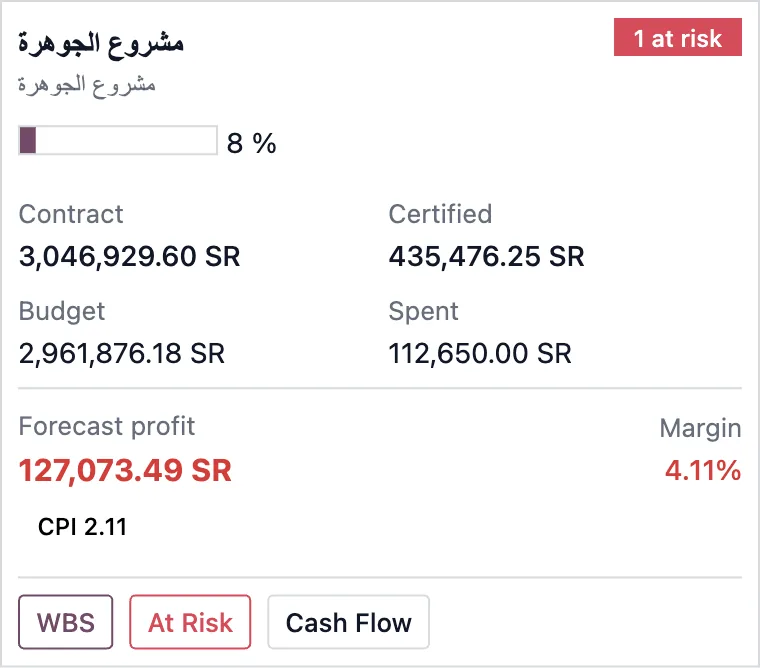
بطاقة تحكم مشروع واحد — العقد والقيمة المعتمدة والصرف والربح المتوقع في شاشة واحدة، بتتحدث مع كل عملية.
الرقم اللي بيظهر هنا هو “الهامش المتوقع” (Forecast Margin) ومؤشر أداء التكلفة (CPI) — مش بس “كام صرفت”، لكن “المشروع ده ماشي في اتجاه ربح ولا خسارة لو استمر بنفس المعدل”. ده الفرق الحقيقي بين نظام بيسجل اللي حصل، ونظام بيوريك اللي جاي.
ETC وEAC وVAC: إزاي تعرف تكلفة مشروعك النهائية قبل ما يخلص
عشان توصل لرقم “الهامش المتوقع” ده محتاج ثلاث حسابات مترابطة، دي مش مصطلحات تسويقية، دي مقاييس معيارية في إدارة تكلفة المشاريع (Earned Value Management):
- ETC (Estimate to Complete) — التكلفة المتوقعة لإكمال الباقي من المشروع، بناءً على معدل الصرف الحالي لكل مركز تكلفة.
- EAC (Estimate at Completion) — التكلفة الإجمالية المتوقعة للمشروع بالكامل = الفعلي لحد دلوقتي + الالتزامات المفتوحة + ETC.
- VAC (Variance at Completion) — الفرق بين الميزانية الأصلية وEAC. لو VAC سالب، ده معناه المشروع متجه يتجاوز الميزانية، وقد إيه.
القيمة الحقيقية إن الحسابات دي بتتعمل لكل مركز تكلفة لوحده (مواد، عمالة، مقاولي باطن)، مش على مستوى المشروع ككل بس. كده تقدر تحدد بالظبط أنهي عنصر هو اللي بيهدد الهامش، مش تكتشف إن “فيه مشكلة” من غير ما تعرف فين بالظبط.
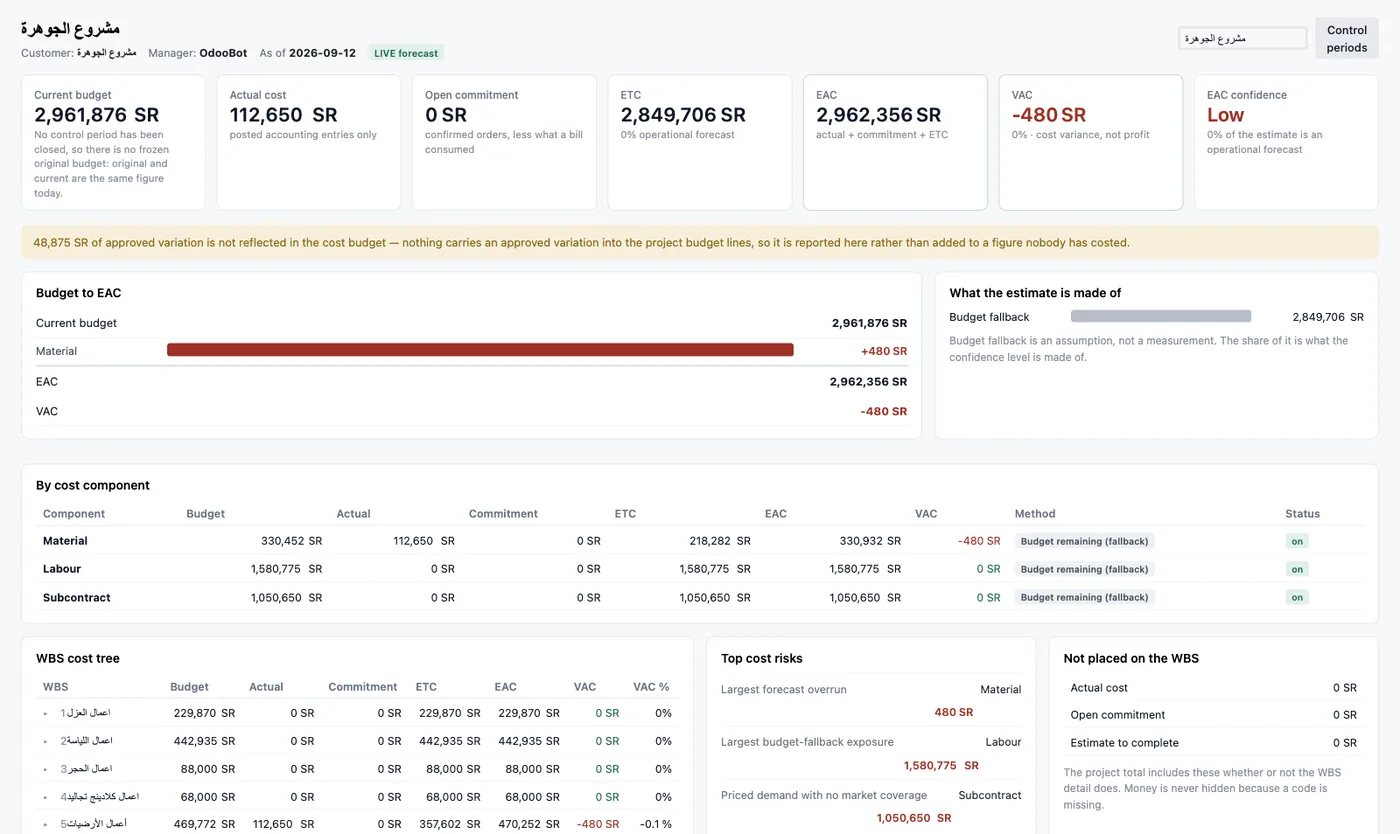
ضبط التكلفة حتى الإنجاز — الميزانية وETC وEAC وVAC مقسّمة حسب عنصر التكلفة (مواد، عمالة، مقاولي باطن) وعقدة WBS، مع أكبر مخاطر التكلفة مرتبة تلقائيًا.
ترتيب المخاطر بدل التخمين
لما يكون عندك EAC وVAC لكل عنصر تكلفة، تقدر ترتبهم حسب الحجم: “أكبر تجاوز متوقع” و”أكبر تعرّض لميزانية افتراضية” (يعني بنود التكلفة اللي معتمدة على تقدير مش على سعر فعلي مؤكد). ده بيحول “حاسس إن فيه مشكلة في التكلفة” لجملة محددة: العنصر ده تحديدًا، بالمبلغ ده تحديدًا، محتاج قرار دلوقتي. الفرق كبير بين الاتنين لما تكون قاعد قدام لجنة إدارة أو بنك ممول.
البدء التدريجي: من مشروع واحد لكل المحفظة
زي أي تغيير في طريقة العمل، الأفضل تبدأ بمشروع واحد نشط: تربط جدول الكميات بتاعه بهيكل WBS ومراكز تكلفة واضحة، وتشغّل حساب ETC/EAC/VAC عليه لمدة شهر. هتلاحظ الفرق بوضوح بين “الميزانية مقابل الفعلي” القديمة و”التكلفة المتوقعة عند الإنجاز” الجديدة، وبعدها تقدر تعمم على باقي المحفظة بثقة. الخطوة دي مش منفصلة عن متابعة العقود وأوامر التغيير والمستخلصات — القيمتين بيتغذوا من نفس البيانات، وكل ما العقد بيتحدث كل ما EAC بيتحدث معاه تلقائيًا.
لو عايز تشوف إزاي كل ده بيترابط عمليًا، اطّلع على صفحة أودو ERP للمقاولات اللي فيها الشاشات دي كاملة، أو لو بتقارن بين أنظمة ERP مختلفة قبل ما تقرر، شوف دليل أفضل نظام ERP في السعودية 2026. أو احجز استشارة مجانية ونراجع هيكل تكلفة مشروعك الحالي مع بعض.
Most contracting companies build the Bill of Quantities (BOQ) carefully at tender stage, and then it becomes a side spreadsheet nobody revisits until there's a dispute. The problem is that the approved budget and actual spend get tracked in two different places, so the company finds out there's a margin problem after the project closes — not while it can still act. The difference between the two approaches is simple: does the BOQ turn into a live cost structure that updates every day, or does it stay a frozen pricing document?
From Bill of Quantities to a Real Cost Structure
The first step is linking every BOQ line item to a WBS (Work Breakdown Structure) node and a specific cost center. In a system like Odoo, this happens through Analytic Accounting: every project gets its own analytic plan, and every cost center under it (materials, labor, subcontractors) gets its own analytic code. Every purchase invoice, timesheet hour, or progress claim posts automatically to the right code, instead of being manually reconciled in a spreadsheet at month-end. This isn't a feature that works out of the box — it requires configuration and mapping to your company's actual cost structure, and that's exactly what happens during setup.
Budget vs. Actual Isn't Enough on Its Own
Most tracking tools stop at "budget vs. actual" — two numbers. The problem is those two numbers say nothing about the future: if you've spent 10% of the budget and completed only 5% of the project, budget-vs-actual will tell you "still within range," while in reality you're heading for a clear overrun. That's why you need a third number: the projected cost at completion.
A single project card — contract value, certified value, spend, and forecast profit in one view, updating with every transaction.
The number that matters here is "forecast margin" and the Cost Performance Index (CPI) — not just "how much have you spent," but "is this project trending toward profit or loss if it continues at this rate." That's the real difference between a system that records what happened and a system that shows you what's coming.
ETC, EAC, and VAC: Knowing Your Final Project Cost Before It's Final
Getting to that "forecast margin" number requires three linked calculations — these aren't marketing terms, they're standard Earned Value Management metrics:
- ETC (Estimate to Complete) — the projected cost to finish the remaining work, based on the current spend rate per cost center.
- EAC (Estimate at Completion) — the total projected cost for the whole project = actual cost to date + open commitments + ETC.
- VAC (Variance at Completion) — the difference between the original budget and EAC. A negative VAC means the project is trending over budget, and by how much.
The real value is that these calculations run per cost center (materials, labor, subcontractors), not just at the whole-project level. That means you can pinpoint exactly which element is threatening the margin, instead of just sensing that "something's off" without knowing where.
Cost-to-completion control — budget, ETC, EAC and VAC broken down by cost component (material, labor, subcontract) and WBS node, with the largest cost risks ranked automatically.
Ranked Risk Instead of Guesswork
Once you have EAC and VAC per cost component, you can rank them by size: "largest forecast overrun" and "largest budget-fallback exposure" (meaning cost items still resting on an assumption rather than a confirmed price). That turns "I have a feeling cost is a problem" into a specific sentence: this exact item, this exact amount, needs a decision now. That difference matters a lot when you're in front of a management committee or a funding bank.
Starting Gradually: One Project Before the Whole Portfolio
As with any change in how you work, it's best to start with one active project: map its BOQ to a clear WBS and cost centers, and run ETC/EAC/VAC calculations on it for a month. You'll clearly notice the difference between the old "budget vs. actual" view and the new "forecast cost at completion" view, and then you can roll it out to the rest of the portfolio with confidence. This step isn't separate from tracking contracts, variation orders, and progress claims — both draw on the same data, and every time the contract updates, EAC updates with it automatically.
To see how it all connects in practice, take a look at the Odoo ERP for construction page, which walks through these exact screens. If you're comparing ERP systems before deciding, see our guide to the best ERP system in Saudi Arabia 2026. Or book a free consultation and we'll review your current project's cost structure together.